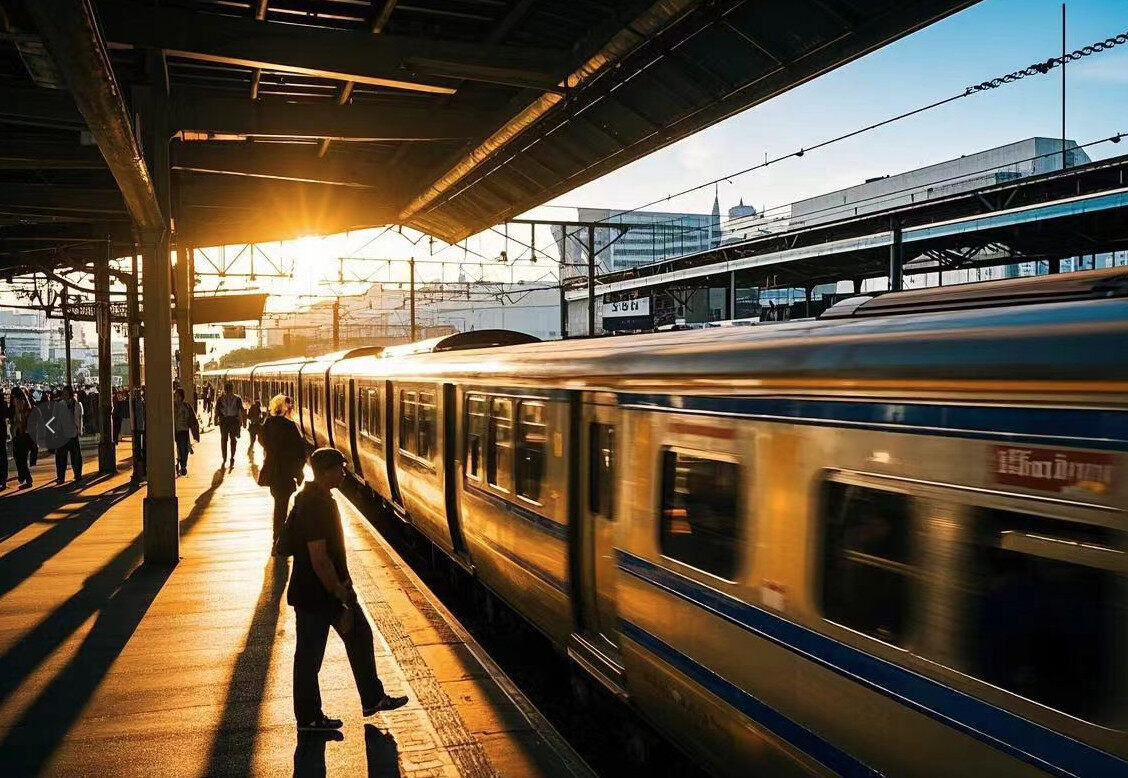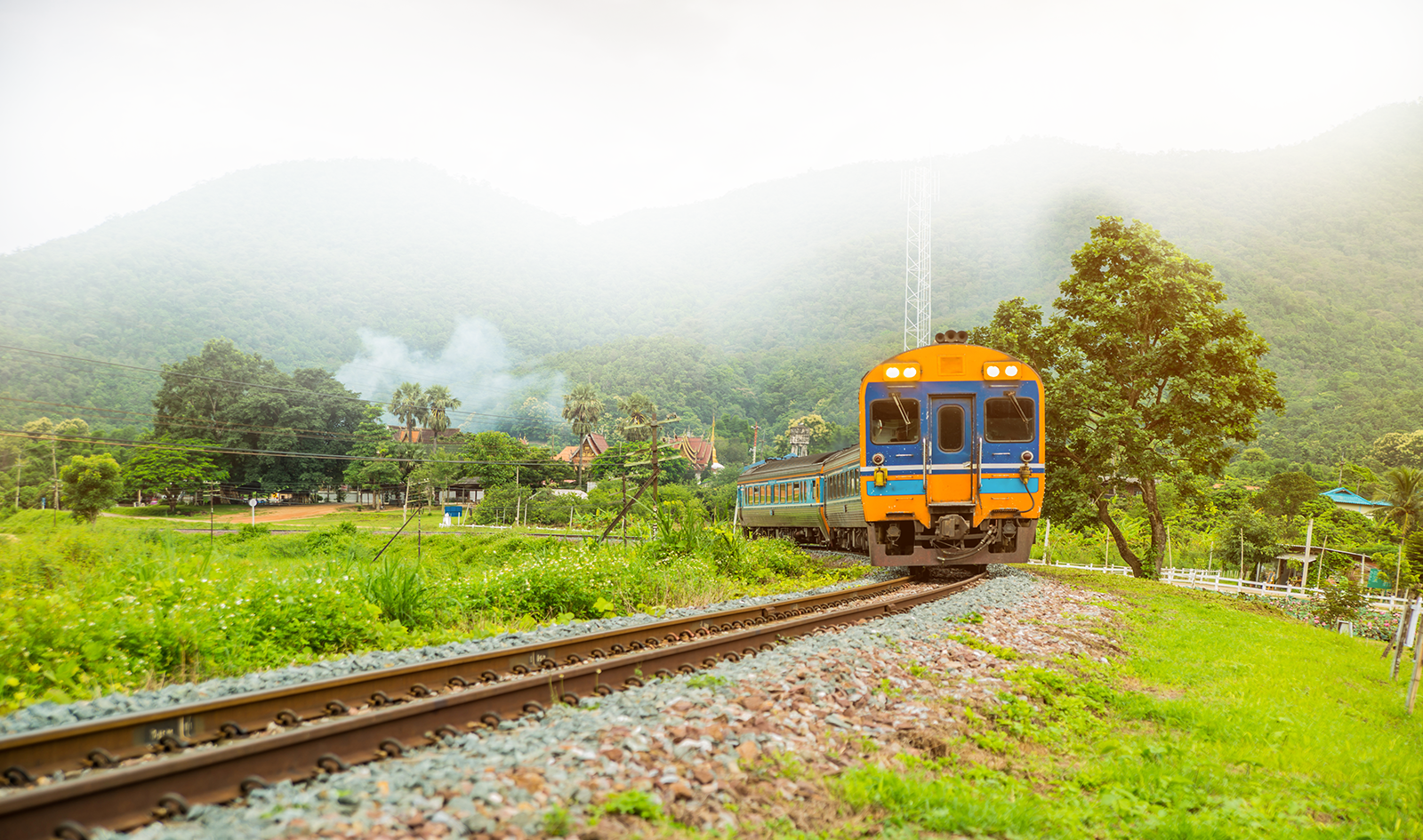
Bangkok to Chiang Mai Train 2026: Schedule & Best Sleeper

Bangkok to Chiang Mai Train 2026: Schedule, Prices & Booking
Key Takeaway: The Special Express Train #9 is your best option for this Bangkok to Chiang Mai train route, completing the overnight journey in just over 13 hours. A 2nd-class air-conditioned lower berth costs around $32, giving you a proper bed and saving you a night's hotel fare. Tickets sell out weeks in advance, so book train tickets online as soon as your travel dates are locked.
You wake up to the gentle rocking of the carriage, pull back the curtain, and watch the mist roll off the jungle-draped mountains of northern Thailand. The flight takes an hour. But you miss everything. I always tell travelers that skipping the domestic flight for the overland route is the single best itinerary choice they can make. Taking the Bangkok to Chiang Mai train is a rite of passage for many visitors to the Land of Smiles. If you are looking for the definitive guide to the Bangkok to Chiang Mai Train 2026: Schedule, Prices & Booking, you are in the right place. We are going to look at exactly which trains to book, which seats to avoid, and how to secure your spot before the tour groups buy them all up.
Unlike a cramped budget airline seat where you pay extra for every kilogram of luggage and a bottle of water, the overnight train gives you a real bed, panoramic views of the Thai countryside, and enough legroom to actually stretch out. The romance of rail travel is alive and well on this route — the gentle clickety-clack of wheels on steel, the ability to walk around freely, and the chance to wake up surrounded by mountains rather than a grey tarmac. Whether you are a solo backpacker on a shoestring budget, a couple seeking a memorable travel experience, or a family wanting an adventure your kids will talk about for years, the Bangkok to Chiang Mai train delivers on every front.
Quick Overview: The Bangkok to Chiang Mai Train 2026 at a Glance

The journey from Bangkok up to the northern capital covers roughly 750 kilometers. Taking the Bangkok to Chiang Mai train is the most popular rail route in the country. Here is what you need to know right now:
- Departure Station: Krung Thep Aphiwat Central Terminal (formerly Bang Sue Grand).
- Arrival Station: Chiang Mai Railway Station (about 10 minutes east of the Old City).
- Duration: 10.5 to 14 hours, depending on which locomotive you choose.
- Frequency: Five direct departures daily.
- Best Stopover: Many travelers break up the trip by stopping in Ayutthaya for a night.
- Total Distance: Approximately 751 km (467 miles) of track through four provinces.
- Key Stops en Route: Ayutthaya, Lopburi, Nakhon Sawan, Phitsanulok, Den Chai, and Lampang.
- Power Outlets: Train #9 has outlets at every berth; older trains have limited or no charging facilities.
Bangkok to Chiang Mai Train Schedule 2026: Which Train is Best?

Not all Bangkok to Chiang Mai train services are created equal. Some are modern carriages from China. Others are charming but rattling relics from the 1990s. Special Express Train #9 is the newest and most comfortable sleeper on the northern line, making the 13-hour journey feel like a rolling hotel. I ride this specific train at least twice a year. It rarely disappoints.
Here is the current daily timetable for 2026. Keep in mind that times can shift slightly, so always verify your specific date when you check latest schedules on thailandtrain.org.
| Train No. | Departure | Arrival | Train Type | Duration |
|---|---|---|---|---|
| #7 | 09:05 | 19:30 | Special Express (Daytime/Seats) | 10h 25m |
| #109 | 14:15 | 04:05 | Rapid (Older Sleeper/Seats) | 13h 50m |
| #9 | 18:40 | 07:15 | Special Express (New CNR Sleeper) | 12h 35m |
| #13 | 20:05 | 08:40 | Special Express (Older Sleeper) | 12h 35m |
| #51 | 22:30 | 12:10 | Express (Older Sleeper/Seats) | 13h 40m |
Train #9: The Undisputed Champion
This is the famous "Red Train" built by CNR and is widely considered the flagship Bangkok to Chiang Mai train. It features airplane-style vacuum toilets, bright LED displays, and incredibly smooth suspension. The air conditioning works almost too well. You get a sealed bottle of water, but there is no dining car service right now. Bring your own snacks. If you want an uninterrupted night of sleep, this is the one to book.
One detail that often surprises first-time riders: the berths on Train #9 are fitted with individual reading lights and small shelf space for phones, books, and water bottles. The curtains are heavy and dark, blocking out both light and noise effectively. Each car also has a dedicated attendant who makes up your bed with fresh sheets and a pillow — a small luxury that makes the overnight ride genuinely comfortable. USB charging ports are available at each berth, though we still recommend carrying a power bank as a backup.
Train #13 and #51: The Classic Alternatives
Missed out on Train #9? Do not panic. Train #13 uses older Japanese-built rolling stock. The beds are actually a tiny bit wider than on the newer trains. The suspension is bouncier, and the toilets dump straight onto the tracks, but the vintage charm is fun. Train #51 leaves late. It gets you into the north around lunchtime, which is perfect if you hate waking up early.
A key difference with these older trains is the fan-forced air option in 2nd-class non-air-conditioned carriages (available on Train #109 and occasionally #51). These "fan cars" are cheaper, breezier, and a genuine backpacker favorite during the cooler months from November to February. However, during the hot season from March to May, you will want the air-conditioned cars without question. The non-AC carriages can exceed 35°C (95°F) even at night.
Train #7: The Daytime Sprinter
You might think sitting for 10 hours sounds miserable. I used to think the same. But Train #7 is a diesel multiple unit (DMU) that blasts through the countryside during daylight. You get an airline-style seat and a microwave meal included in the ticket. It is fantastic for scenery, especially the final three hours climbing through the Khun Tan mountain range.
The DMU seats recline to about 40 degrees and have fold-down tray tables, making them far more comfortable than any domestic airline seat in Thailand. The included meal is basic — usually rice with a curry or stir-fry — but perfectly edible. You will also pass through several small-town stations where vendors hop on briefly selling grilled meats, fresh fruit, and iced coffee through the windows. Keep small bills (20 and 50 THB notes) handy for these impromptu purchases. The window vendors at Nakhon Sawan and Phitsanulok stations are particularly worth waiting for.
Ticket Prices & Sleeper Classes: What You Actually Get

Pricing on Thai railways is strictly regulated by the State Railway of Thailand, meaning costs are predictable. Taking the Bangkok to Chiang Mai sleeper train is often more cost-effective than flying when you factor in the saved hotel night. A lower berth in a 2nd class air-conditioned sleeper costs roughly $32, offering the best balance of price, comfort, and privacy for the overnight trip.
Let's break down the actual costs for the 2026 season. Fares vary slightly depending on whether you choose the newer or older trains. To secure these prices, we highly recommend you book your Bangkok to Chiang Mai train tickets online well in advance.
| Class & Bed Type | Train #9 (New) | Train #13 (Older) | Where to Book |
|---|---|---|---|
| 1st Class - Lower | $52 | $45 | Book 1st Class |
| 1st Class - Upper | $48 | $40 | Book 1st Class |
| 2nd Class - Lower | $32 | $28 | Book 2nd Class |
| 2nd Class - Upper | $29 | $25 | Book 2nd Class |
| 2nd Class Seat (Day) | N/A | $19 (Train #7) | Book Seats |
Price comparison with flying: A budget airline ticket from Bangkok to Chiang Mai typically costs $30–$60 one-way when booked in advance, but you must add airport transfers on both ends ($10–$20), checked baggage fees ($8–$15), and a night of accommodation in Chiang Mai ($15–$40). When you add it all up, the train comes out cheaper — or at least break-even — and delivers a far richer travel experience.
1st Class Sleeper: Private Cabins
First class gets you a private, lockable cabin with two beds and a personal washbasin. If you are traveling solo, you must either buy out the whole room or share with a stranger of the same gender. The privacy is phenomenal. The price tag is steep. Tickets for these cabins on the Bangkok to Chiang Mai train vanish instantly when the booking window opens.
First-class cabins on Train #9 feature slightly upgraded amenities compared to the older trains: a larger washbasin, better soundproofing, and a small mirror. The cabin door locks from the inside, and you can control your own lighting independently. Couples traveling together will find first class worth the splurge — you get a genuinely private room for roughly $50 per person for a 13-hour journey. Try finding a hotel and transport for that price. One thing to note: there is no shower on any Thai train, so pack wet wipes and plan to freshen up at your hotel in Chiang Mai.
2nd Class Sleeper: The Sweet Spot
This is where 90% of travelers end up. The carriages are open-plan with beds lining the central aisle. During the day, two facing seats offer plenty of legroom. Come evening, the attendant magically folds them flat, adds a mattress pad, and hangs heavy privacy curtains. Read our deep dive into the 1st vs 2nd class sleeper comparison if you are still on the fence.
On Train #9, the 2nd-class air-conditioned sleeper is remarkably well-designed. The berths are cocooned by sturdy curtains that block out nearly all overhead light. Each berth has its own individual reading lamp, a small shelf for personal items, and a hook for jackets or bags. The mattresses on the newer CNR trains are firmer and thicker than on the older Japanese-built carriages. The aisle is wide enough for the attendant to push a trolley through for the evening drink service — expect them to offer instant coffee, Ovaltine, and Cup Noodles for a modest fee.
The Upper vs. Lower Berth Debate
Pay the extra three dollars for the lower berth. Just do it. The lower bed is significantly wider, has a window to watch the sunrise, and does not require climbing a tiny metal ladder in the middle of the night. The upper berth is narrower and sits closer to the fluorescent lights and the freezing AC vents.
There is one scenario where the upper berth makes sense: if you value privacy. The upper berth sits higher and is more enclosed, meaning fewer passersby can see you behind the curtain. If you are a light sleeper who is sensitive to the aisle foot traffic during the first few hours of the journey (while attendants are still converting seats and passengers are settling in), the elevated position of the upper berth can actually be quieter. That said, for the vast majority of travelers — especially those who are taller than 170 cm (5'7") — the lower berth is non-negotiable.
What to Expect at Krung Thep Aphiwat Central Terminal
If you have not taken a train in Thailand since before 2023, you are in for a surprise. The old Hua Lamphong station is no longer the main hub for the Bangkok to Chiang Mai train. Instead, you will depart from the massive Krung Thep Aphiwat Central Terminal.
This station is enormous and feels more like an international airport than a train depot. Arrive at least 45 minutes before your departure time. You will need that time to navigate the massive concourse. There is a food court on the ground floor serving excellent and cheap Thai meals, which is perfect since the onboard dining options are currently limited. You can easily reach the station via the MRT Blue Line (alight at Bang Sue station) or by taking a Grab taxi directly to the main departure gates.
Once inside the terminal, you will pass through airport-style security screening before entering the main departure hall. The hall itself is modern and air-conditioned, with large digital screens displaying train information in both Thai and English. There are clean restrooms, convenience stores (7-Eleven and Lawson), and a handful of sit-down restaurants on the upper levels. The food court on the lower ground floor is the real winner — try the khao man gai (chicken rice) stall for a meal that costs under 50 THB and tastes incredible.
Platform access works differently here than at the old Hua Lamphong. Your platform number will only appear on the screens about 20–30 minutes before departure. Do not panic if you cannot find your platform earlier — this is normal. When the platform number appears, you will scan your ticket (paper or digital QR code) at the automatic gate to enter the platform area. Have your booking confirmation ready on your phone. International travelers should note that the station has clear English signage throughout, so navigating the terminal is straightforward even for first-time visitors.
How to Book Bangkok to Chiang Mai Train Tickets in 2026

Gone are the days when you could stroll into the station on a Tuesday and buy a sleeper ticket for Wednesday. For travel in 2026, you must book your Bangkok to Chiang Mai train tickets online exactly 90 days in advance if you want a sleeper berth on Train #9.
The official booking system can be notoriously finicky with foreign credit cards. It also requires a somewhat clunky registration process. That is why most international travelers prefer to use a reliable third-party agency. You can easily figure out how to book Thailand train tickets online through our portal, which handles the exact timing of the ticket release for you. When you book train tickets online via thailandtrain.org, you get a digital PDF ticket with a QR code. You just show it on your phone to the conductor. No printing required.
Peak season booking strategy: If you are traveling during the high season (November through February), during Songkran (mid-April), or around the Yi Peng / Loy Krathong festival dates in Chiang Mai (usually November), sleeper berths on the best trains sell out within hours of becoming available. Set a calendar reminder for exactly 90 days before your intended travel date and book the moment the window opens. Using a service like thailandtrain.org gives you an edge because the system can queue your booking request before the general public window refreshes, significantly increasing your chances of snagging those coveted lower berths on Train #9.
What if tickets are sold out? Do not give up immediately. Thai Railways occasionally releases additional seats 7–10 days before departure when reserved group blocks are released. Some travelers also cancel their bookings, and those seats appear back in the system within 24 hours. Set up alerts on thailandtrain.org to be notified when availability returns for your preferred date. Flexibility with your travel date by even one day can make the difference between a sold-out train and a confirmed lower berth.
Arriving in Chiang Mai: Getting to Your Hotel
After a long night on the Bangkok to Chiang Mai train, you will pull into Chiang Mai Railway Station. The station is located about 3 kilometers east of the historic Old City moat. As soon as you exit the station doors, you will see a fleet of red pickup trucks known as songthaews.
These shared taxis are the cheapest way into town. Expect to pay around 40 to 50 THB per person to be dropped off at your hotel or hostel in the Old City or Nimman area. If you prefer a private ride, Grab and Bolt ride-hailing apps work perfectly here, though you may need to walk slightly away from the main taxi rank to meet your driver.
Early morning arrival tips: If you arrive on Train #9 around 7:15 AM, many hotels and guesthouses in Chiang Mai will not have rooms ready for check-in until noon or 2:00 PM. Rather than sitting in the lobby, use this time strategically. Drop your bags at the hotel reception (virtually every hotel in Chiang Mai offers free luggage storage), and head straight to a local coffee shop — the Nimmanhaemin area has world-class specialty coffee roasters open from 7:00 AM. Alternatively, walk the quiet morning streets of the Old City before the crowds arrive. The temples, particularly Wat Phra Singh and Wat Chedi Luong, are magical in the early morning light and far less crowded than midday.
Late morning arrival on Train #51: If you take the later Train #51 and arrive around noon, check-in will be ready immediately at most places, and you will have the entire afternoon free. This train's arrival time actually works perfectly with the rhythm of Chiang Mai — lunch at a local market, an afternoon temple visit, and dinner at the famous Sunday Walking Street market (if it is the right day of the week).
7 Pro Tips for the Northern Line
I have made every mistake possible on this route. Here is how you avoid them:
- Pack a heavy sweater: The State Railway of Thailand treats air conditioning as a competitive sport. The carriages drop to around 18°C (64°F) at night. The provided blanket is thin.
- Use the agency advantage: Because 1st class Bangkok to Chiang Mai train tickets sell out in minutes, using thailandtrain.org to queue your booking before the official 90-day window opens is the smartest strategy.
- Bring your own toilet paper: Train #9 is usually well-stocked, but Trains #13 and #51 often run out of paper by 3:00 AM.
- Eat before you board: The food vendors that used to roam the aisles pre-2020 have not fully returned. Eat a massive bowl of boat noodles at the food court inside Krung Thep Aphiwat before departure.
- Keep your luggage compact: There is no dedicated baggage car for standard passengers. Your bags slide under the lower bunk or sit on a rack near your bed. Massive hard-shell suitcases will make your life miserable. A 40-liter backpack or a soft-sided duffel bag is ideal.
- Wake up early for the views: Set your alarm for 6:00 AM. The last two hours of the journey feature stunning views of mountains, mist, and rural villages. The section through the Khun Tan Tunnel — the longest railway tunnel in Thailand at 1.3 km — is immediately followed by breathtaking mountain scenery that makes you grateful you chose the train over a plane.
- Download your entertainment: The Wi-Fi on Train #9 is spotty at best. Cell service drops out completely when you hit the mountains past Lampang.
Frequently Asked Questions
How much is the train from Bangkok to Chiang Mai in 2026?
A 2nd-class air-conditioned lower berth costs approximately $32 (around 1,100 THB), while 1st-class private cabins are significantly higher. Prices vary slightly depending on the train number and whether you choose an upper or lower berth. You can check exact daily prices here.
Which train is the best for the Bangkok to Chiang Mai train route?
Special Express Train #9 is the top choice because it uses modern CNR carriages and offers the most comfortable overnight experience. It features clean facilities, power outlets at every seat, and high-quality sleeper berths. For scenery lovers who prefer a daytime ride, Train #7 is a strong alternative with its panoramic windows and faster journey time.
Where do trains to Chiang Mai depart from in Bangkok?
All long-distance trains to Chiang Mai depart from Krung Thep Aphiwat Central Terminal, formerly known as Bang Sue Grand Station. This modern hub has replaced the old Hua Lamphong station for the Northern Line. The station is connected to the MRT Blue Line (Bang Sue station) and is approximately 30 minutes by taxi from the Khao San Road area and 20 minutes from central Sukhumvit.
How far in advance should I book the Bangkok to Chiang Mai train?
You should book at least 2 to 4 weeks in advance, especially for the popular Special Express #9, as sleeper berths sell out quickly. During Thai holidays or peak tourist season, booking 30 to 90 days ahead is highly recommended to secure a lower berth. The booking window opens exactly 90 days before departure, so planning early is key.
How long does the train journey take from Bangkok to Chiang Mai?
The journey takes between 10.5 and 14 hours, with the fastest daytime train (#7) arriving in just over 10 hours. Overnight sleepers typically take around 13 hours, allowing passengers to sleep through the bulk of the trip. Minor delays of 15–45 minutes are common and should be factored into any onward travel plans.
Is it safe to take the overnight train in Thailand?
Yes, the Bangkok to Chiang Mai train is very safe. The trains are staffed by uniformed conductors and attendants throughout the journey. Each carriage has an attendant who stays awake overnight. Petty theft is rare but not unheard of — keep valuables in a small daypack that you use as a pillow, and use the luggage hook or slide bags securely under your berth. Solo female travelers regularly take this route without issues, and the well-lit open-plan 2nd-class carriages provide a communal, social atmosphere that many find reassuring.
Can I break the journey and stop in another city along the route?
Absolutely. Many travelers stop in Ayutthaya (1.5 hours from Bangkok) to explore the ancient temple ruins, or in Lampang (about 2 hours before Chiang Mai) to experience a quieter, more authentic northern Thai town. Phitsanulok is another popular stop, serving as the gateway to Sukhothai Historical Park. Simply book two separate tickets — one from Bangkok to your stopover city, and another from there to Chiang Mai — to customize your journey.
What should I bring on the Bangkok to Chiang Mai train?
Pack light but smart. Essentials include a warm layer (fleece or hoodie), earplugs, an eye mask, a refillable water bottle, snacks or instant noodles, wet wipes or hand sanitizer, a portable power bank, and your entertainment loaded on your phone. A small travel pillow is not necessary on the sleeper berths (they provide one) but can make the daytime seat trains more comfortable. Slip-on shoes are convenient since you will be removing them to climb into the upper berth.