5 Most Scenic Thailand Train Routes [2024/2025 Guide]
![5 Most Scenic Thailand Train Routes [2024/2025 Guide]](https://static.thailandtrain.org/images/articles/cover-1774612106777.png?x-oss-process=image%2Fresize%2Cw_800%2Climit_1%2Fformat%2Cwebp%2Fquality%2Cq_75)
Best Scenic Train Routes in Thailand 2026: The Complete Guide
Key Takeaway: When exploring the scenic train routes Thailand offers, the absolute best is the daytime Special Express No. 7 from Bangkok to Chiang Mai, taking 11 hours and costing roughly 641 THB ($18) - book train tickets online here. For sheer historical drama, the 4.5-hour Death Railway journey to Nam Tok (100 THB) is unmatched. Because window seats on daytime routes sell out fast, you should book up to 90 days in advance to guarantee your spot. This guide details every major route, with 2026 schedules, precise seat recommendations, and insider logistics to transform your train journey from a simple transit into a highlight of your Thai trip.
Forget the cramped domestic flights. The best scenic train routes Thailand features do not just move you from point A to B. They drop you right into the middle of limestone karsts, dense teak forests, and coastal stretches that highways simply cannot reach. You get air-conditioned comfort. You get massive windows. And you get a front-row seat to the country's actual pulse. If you want to experience the most scenic train routes in Thailand, you have to look beyond the sleeper cars. Sure, flying to Chiang Mai takes an hour, but you miss the slow, dramatic transition from flat central plains to the misty northern highlands, witnessing rice paddies transform into rolling hills, and finally into forested mountains—a journey that reveals Thailand's geographical soul.
I have spent countless hours riding these rails. The rhythm of the tracks becomes addictive. Vendors hop on at brief provincial stops, selling hot meat skewers and sticky rice through the open windows of third-class carriages. The landscape shifts constantly—from urban sprawl to rural tranquility in minutes. But not all routes are created equal for sightseeing. If you book a night sleeper, you will wake up refreshed, but you will sleep right through the best scenic train routes Thailand provides. The daytime journey itself is the destination.
Essential Tips for Booking Scenic Train Routes in Thailand
The 90-Day Booking Window for 2026 Thai Train Tickets
The 2026 Booking Window: The State Railway of Thailand (SRT) currently allows bookings up to 90 days in advance for long-distance trains. Window seats on daytime express trains vanish quickly. For popular routes like Bangkok–Chiang Mai, roughly 70% of window-side seats are gone within the first 48 hours of the booking window opening. That means if you want a Saturday departure on Train 7, you need to be online exactly 90 days out. The booking system resets daily at around 06:00 ICT (Indochina Time), which is when the new batch of 90-day-ahead tickets becomes available—set a reminder and book via thailandtrain.org the moment the window opens. For those who miss this window, checking for cancellations 1-2 weeks before departure can sometimes yield results, but it's a risky strategy for a must-do scenic trip.
Daytime vs. Nighttime Trains: Which Offers Better Scenery?
Day vs. Night: Sleeper trains are incredibly popular, but they travel through the most scenic mountain and coastal sections in pitch darkness. You want daytime Diesel Railcars (DRC) for views. Here is the breakdown: a night sleeper departs Bangkok at 18:40–20:05 and passes through the Khun Tan mountain range between 02:00 and 04:00. Total blackout. The daytime Train 7 hits that exact same stretch between 14:30 and 16:00, when the light is golden and the valleys are glowing. If scenery is your priority, it is not even a close contest. The psychological benefit is also key: a daytime journey allows you to acclimate to the changing environment, making the arrival in a new region like Chiang Mai feel more earned and connected.
Choosing the Best Window Seat for Scenic Views and Comfort
Seat Selection Matters: The sun in Thailand is brutal. Picking the correct side of the train (East vs. West) dictates whether you stare at beautiful scenery or pull the sunshade down for six hours. On the Northern Line heading to Chiang Mai, the left side (facing forward) gets the afternoon sun but also scores the mountain valley views between Lampang and Chiang Mai. My advice: sit left, bring sunglasses, and accept the heat trade-off. On the Southern Line, the left side faces the Gulf of Thailand from Hua Hin southward—a non-negotiable for coastal photos. Insider tip: seats in rows 1–10 of the DRC carriages tend to vibrate less than those at the rear, which matters on the mountain curves. Also, the very front seats in carriage 1 (if accessible) often offer an unobstructed forward view down the tracks, a unique perspective for enthusiasts.
Understanding Thai Train Ticket Classes for Scenic Travel
Know Your Classes: Thai trains have three main classes, and the difference is significant for scenic travel. Second-class air-conditioned (2nd AC) costs about 50% more than third class but offers reclining seats, cold air, and sealed windows. Third class (3rd Fan) is cheaper, has no AC, but gives you open windows—perfect for unobstructed photography and interacting with the lively local atmosphere. The Special Express DRCs used on Train 7 feature only 2nd AC seating, with 72 seats per carriage. Prices for the 2026 season start at 641 THB ($18) for a standard seat and go up to 891 THB ($25) for the wider first-class seats on select services. Compare this to a budget flight at 1,200–2,500 THB, and the train suddenly looks like a steal for the experience you get—check current 2026 fares on thailandtrain.org. For the Death Railway and other local lines, 3rd class is your only and best option for an authentic experience.
New Departure Terminal Guide: Krung Thep Aphiwat Central Station
Terminal Shift: Almost all long-distance scenic routes now depart from the massive new Krung Thep Aphiwat Central Terminal in Bangkok, not the old Hua Lamphong station. The terminal is enormous—think airport-sized, with multiple levels. Platforms are numbered 1 through 12, and long-distance trains typically use platforms 5–10 on the upper level. You will find a 7-Eleven, a few noodle stalls, and a small coffee shop inside the departures area, but food options are limited compared to what Hua Lamphong used to offer. Insider tip: eat before you arrive, or grab snacks from the vendors on platform level. The terminal is accessible via MRT Blue Line (Bang Sue station exit 3), and the walk from the MRT platform to the train platforms takes roughly 12 minutes at a brisk pace. Arrive 45 minutes early minimum. For a quick, authentic meal, seek out the "Khao Man Gai" (chicken rice) stall near platform 8—it’s a favorite among regulars.
Bangkok to Chiang Mai: Thailand's Premier Scenic Train Route
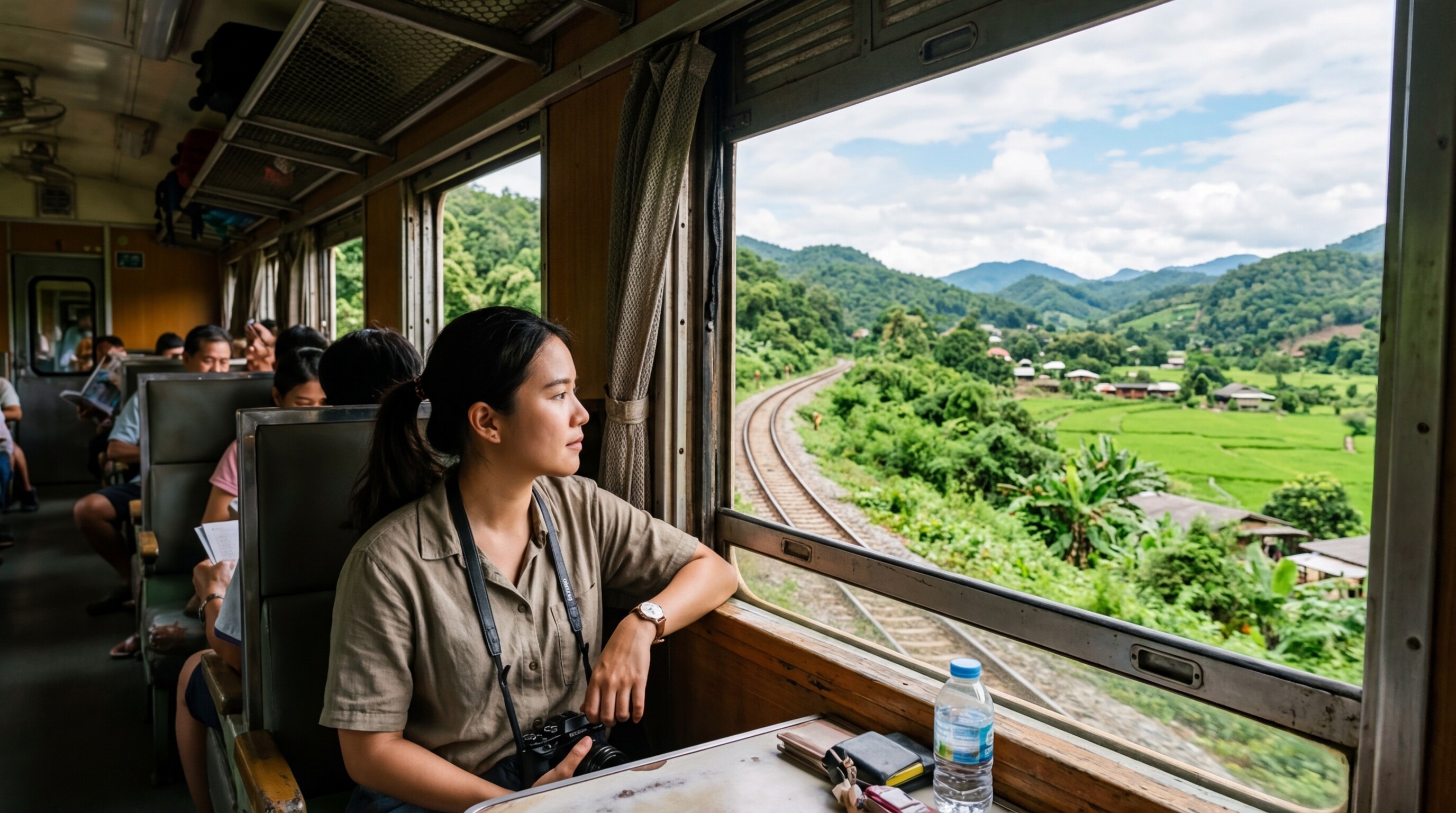
Why the Daytime Special Express No. 7 Is the Best Scenic Choice
Most tourists default to the overnight sleeper when looking for scenic train routes in Thailand. That is a mistake if you care about scenery. The daytime Special Express Train No. 7 is a completely different beast; it is widely considered one of the top scenic train routes Thailand has for nature lovers. Leaving Bangkok at 09:05, this air-conditioned railcar spends the first few hours tearing through the flat, sun-baked rice paddies of Ayutthaya and Phitsanulok. It is pretty, but repetitive. Then, around mid-afternoon, the magic happens.
The Khun Tan Mountain Climb: Tunnels, Ravines, and Jungle Views
The train begins to climb. The daytime Special Express Train No. 7 offers the longest continuous stretch of mountain scenery in Thailand, climbing through the jungle-draped Khun Tan range before descending into Chiang Mai. You will pass through the Khun Tan Tunnel—the longest railway tunnel in the country at 1,362 meters—and emerge into a landscape of steep ravines and dense teak forests. The windows on these Daewoo railcars are massive. The climb from the plains to the summit near Khun Tan station spans roughly 90 minutes, and during that window, the elevation jumps from around 50 meters to over 800 meters. The temperature drops noticeably—you will feel it through the glass. As you approach Lamphun, look for the intricate terraced orchards and small, stilted farmhouses dotting the hillsides—a prelude to Chiang Mai's charm. If you want to guarantee a window seat on these scenic train routes through Thailand, you need to book your tickets on thailandtrain.org well before your trip.
Train Schedule Comparison: Daytime vs. Overnight Services to Chiang Mai
| Train No. | Type | Departure | Arrival | Scenery Rating | Est. Price (2nd AC) | Action |
|---|---|---|---|---|---|---|
| Train 7 | Special Express (Day) | 09:05 | 19:30 | ⭐⭐⭐⭐⭐ (Full daylight mountains) | 641 THB ($18) | Book Train 7 |
| Train 9 | Special Express (Sleeper) | 18:40 | 07:15 | ⭐⭐ (Mountains passed in darkness) | 1,041 THB ($29) | Book Train 9 |
| Train 13 | Special Express (Sleeper) | 20:05 | 08:40 | ⭐⭐⭐ (Morning mountain descent) | 941 THB ($26) | Check Prices |
| Train 109 | Rapid (Mixed) | 14:15 | 05:00 | ⭐⭐⭐ (Late afternoon plains) | 400–800 THB ($11–$22) | Check Prices |
If you absolutely must travel overnight, the older Train 13 (departing at 20:05) actually offers better morning views than the newer Train 9, as it arrives later in the morning, meaning you wake up to see the final mountain approach into Chiang Mai. Around 06:30, as the train descends through the Mae Taeng valley, the mist sits low in the rice terraces and the light is soft and golden. But for pure, uninterrupted sightseeing, Train 7 is the undisputed king. Pro Tip: If Train 7 is sold out, consider taking Train 109 (Rapid). While slower and less comfortable, its 14:15 departure still catches the late afternoon mountain scenery and is often available last minute.
Onboard Food and Dining on the Bangkok to Chiang Mai Train
The DRC carriages on Train 7 do not have a full dining car, but they do have a food trolley service. A Thai-style rice and curry box runs 60–80 THB ($1.70–$2.25), and bottled water is 15 THB. The quality is basic but edible. Insider tip: skip the trolley and pack your own food from the vendors at Krung Thep Aphiwat before boarding—there is an excellent pad Thai stall on the platform level that does takeaway boxes for 50 THB. Alternatively, when the train stops at Nakhon Sawan (around 11:30, 2.5 hours in) and Phitsanulok (around 13:15), platform vendors sell grilled chicken skewers, sticky rice, and iced coffee through the open doors. The Phitsanulok vendors are particularly good. You have roughly 5–8 minutes at these stops, so move fast. Don't miss the orange juice vendors—the fresh-squeezed juice is a refreshing treat for 20 THB.
Kanchanaburi to Nam Tok: The Historic Death Railway Scenic Route
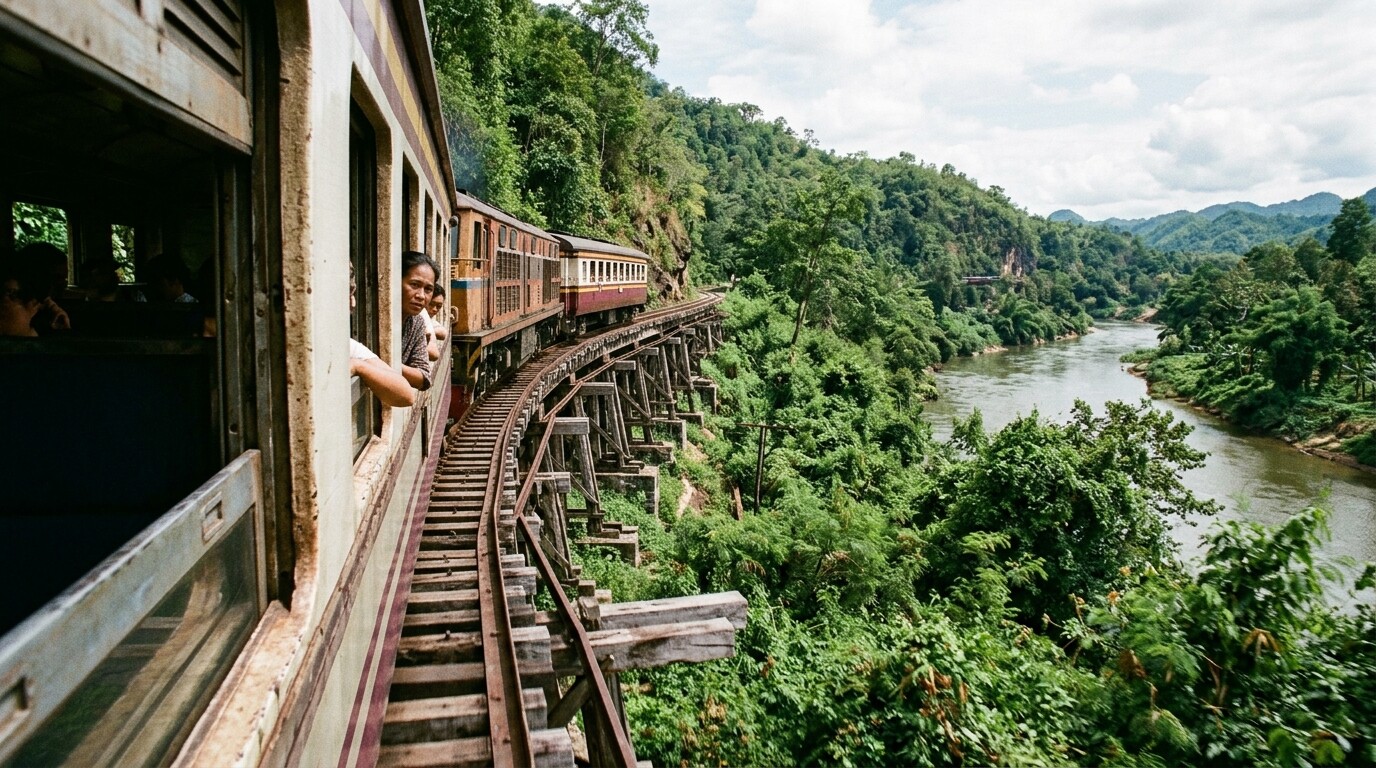
WWII History and Scenic Beauty Along the Death Railway
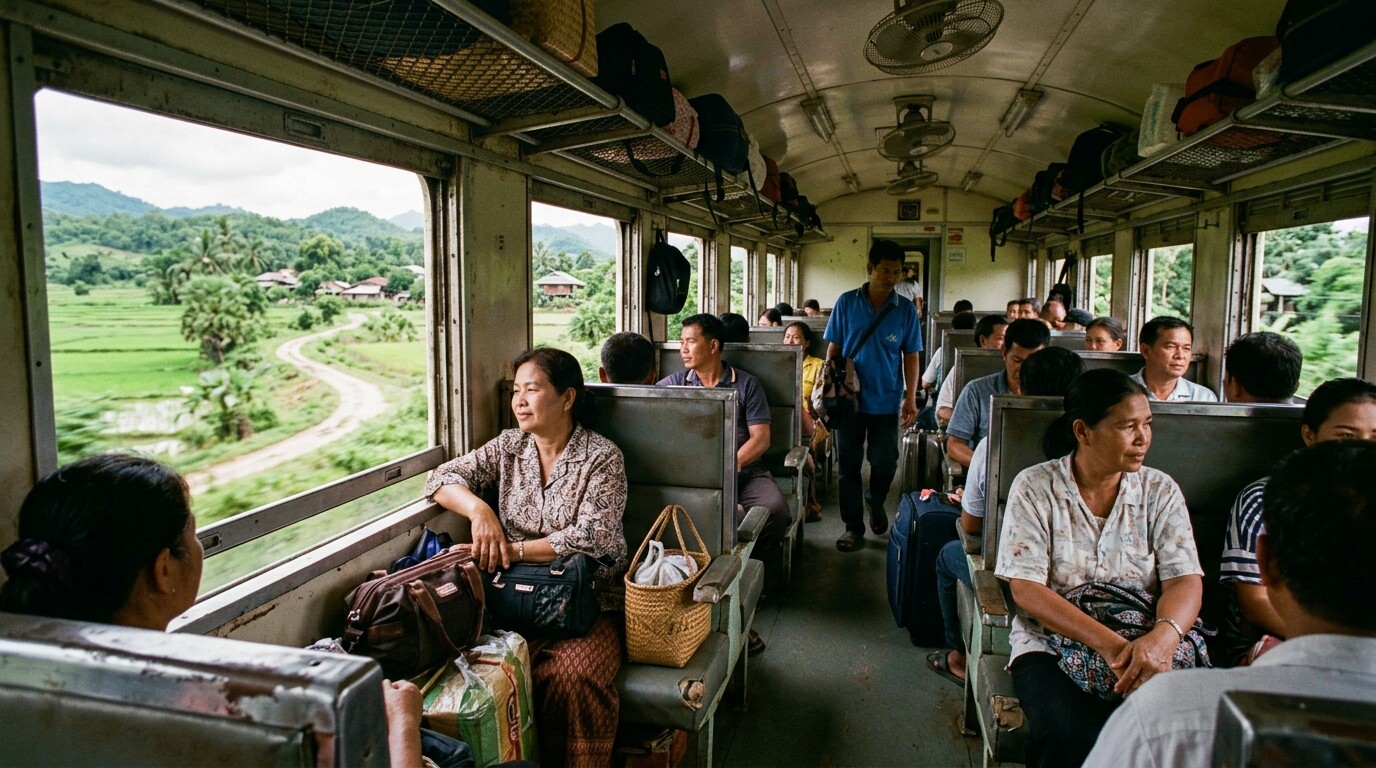
You do not ride this train for luxury. You ride it to feel the hair stand up on the back of your neck. The Death Railway, constructed by Allied POWs and Asian laborers during WWII, is a sobering piece of history wrapped in staggering natural beauty, making it one of the most famous scenic train routes Thailand operates. The train itself is strictly third-class. Wooden benches. Open windows. Ceiling fans violently pushing hot air around. It is brilliant.
The Wang Po Viaduct: Dramatic Cliff-Side Views Over the River Kwai
Starting from Kanchanaburi (after a quick stop at the famous Bridge over the River Kwai), the train rattles westward. For the first hour, you pass cassava fields and small villages. Then, the train slows to a crawl. The two-hour stretch between Kanchanaburi and Nam Tok delivers Thailand's most dramatic railway engineering, where the tracks cling to sheer limestone cliffs on rickety wooden trestles above the River Kwai. This section is the highlight of many scenic train routes Thailand offers travelers. Look out the left side of the train, and there is a straight drop down into the muddy river. Look out the right, and you can literally touch the rock face passing by. The Wang Po Viaduct—the most photographed section—spans roughly 400 meters along the cliff edge, with the river visible 30 meters below through gaps in the wooden sleepers. The train moves at walking pace here. You can feel the structure flex beneath you. It is exhilarating and terrifying in equal measure. Listen for the guide's announcements as you approach; they often point out specific historical sites along the route.
How to Book Death Railway Tickets from Kanchanaburi
Tickets cost a flat 100 THB ($2.80) for foreigners, purchased at Kanchanaburi station on the day of travel. There are two daily departures from Kanchanaburi to Nam Tok: the 10:35 morning train and the 14:48 afternoon service. The morning run is significantly more popular and often standing-room-only by departure time. You cannot reserve these local tickets online in advance. However, you absolutely should book your connecting trains from Bangkok to Kanchanaburi ahead of time, as that initial leg gets surprisingly crowded on weekends. The Bangkok–Kanchanaburi train (Train 257, departing Thonburi station at 07:45) costs 100 THB and takes roughly 3 hours. Before you go, study the Map of Thailand's Kanchanaburi Train Line to understand exactly where the viaduct drops are. Alternative Route: Many travelers take a minibus from Bangkok's Southern Bus Terminal to Kanchanaburi (2-3 hours, ~120 THB) to connect with the morning train, offering more scheduling flexibility.
Station Facilities: What to Expect at Kanchanaburi and Nam Tok
Kanchanaburi station is small but functional: a ticket counter, basic restrooms, a few food stalls outside the entrance, and a 7-Eleven two blocks east on Saengchuto Road. No WiFi, no luggage storage. Nam Tok station is even more bare-bones—it is essentially a covered platform with a ticket window and nothing else. Insider tip: if you plan to visit Hellfire Pass after arriving at Nam Tok, arrange a taxi or songthaew in advance, as there is no reliable transport waiting at the station. The pass is about 15 km away and a round-trip taxi typically costs 300–400 THB ($8–$11). Most visitors take the morning train, spend 2–3 hours at the museum and walking trail, then return on the 13:40 afternoon train back to Kanchanaburi. The museum at Hellfire Pass is world-class and deeply moving—budget extra time there.
Pasak Jolasid Dam Floating Train: A Unique Seasonal Scenic Experience
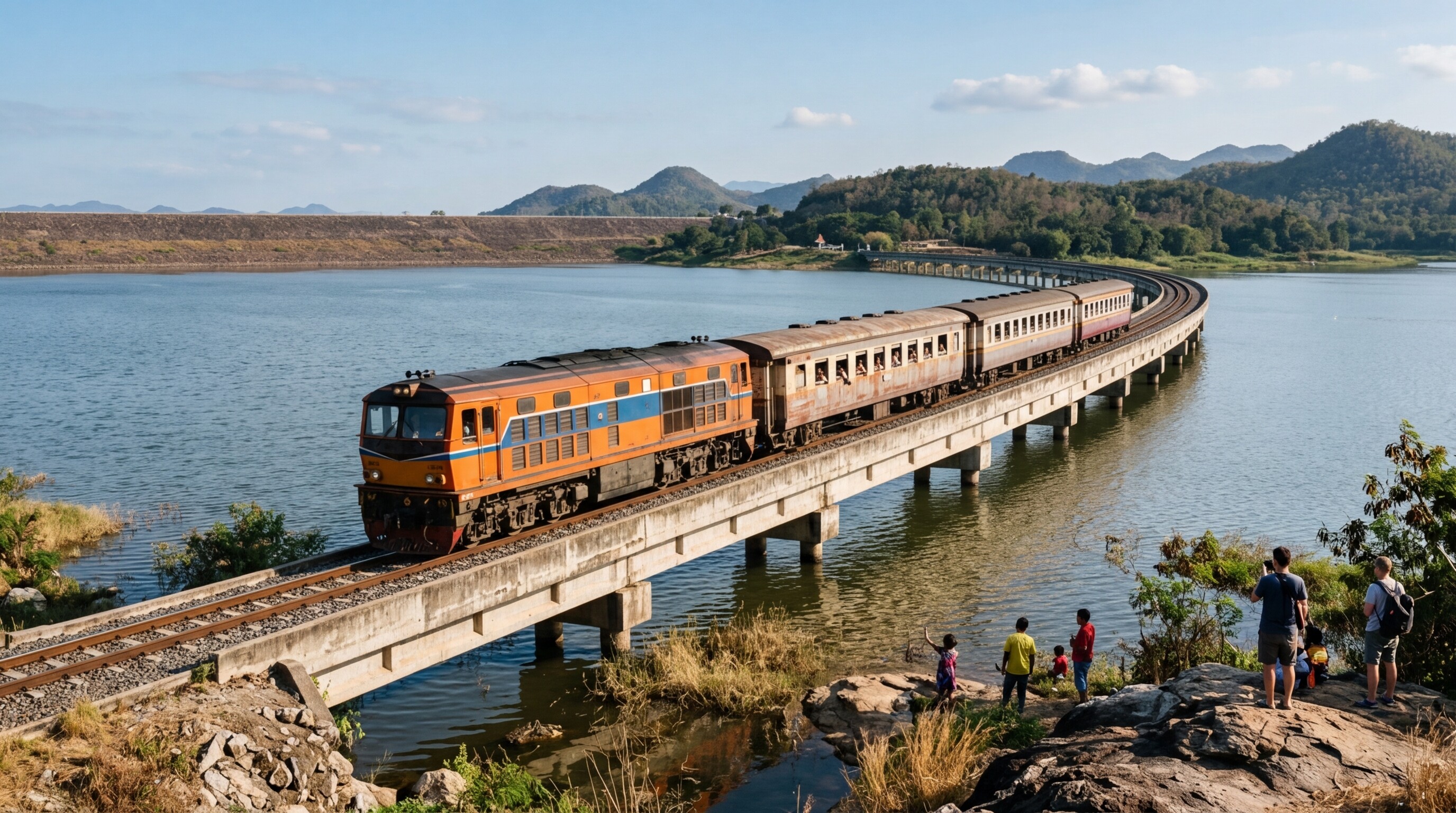
Seasonal Operation: November to January Weekend Service Only
Here is a route most foreign tourists completely miss; it's among the most unique scenic train routes Thailand opens seasonally. Between November and January, when the monsoon rains have filled the Pasak Jolasid reservoir to the brim, the SRT runs a special weekend-only excursion train. Locals call it the "Rot Fai Loi Nam," or the floating train. The 2025–2026 season typically runs from the first weekend of November through the last weekend of January, with departures every Saturday and Sunday.
The Floating Train Experience: Stopping on the Reservoir
The train departs Bangkok's Krung Thep Aphiwat terminal early in the morning (usually around 07:00 or 08:00, announced each season) and heads northeast into Lopburi province. The journey takes roughly 3 hours to reach the dam. The standard scenery is pleasant enough, featuring endless sunflower fields that bloom in December. But the main event happens when the train routes directly over the reservoir. Operating only on winter weekends, the Pasak Jolasid "Floating Train" stops directly on a reservoir bridge for 20 minutes, allowing passengers to step out over the water for photos. Because the water level is so high, the tracks themselves seem to disappear. You are just standing on a train in the middle of a massive lake. The water stretches to the horizon on both sides. It is surreal. During this stop, vendors sell snacks and drinks, and there's a palpable festive atmosphere among the Thai passengers.
How to Book and Secure Floating Train Tickets Before They Sell Out
Tickets cost approximately 300–400 THB ($8–$11) per person for the round trip, and they are notoriously difficult to get. Thai social media explodes every October when the SRT announces the season dates, and sellout happens within hours. If you want to ride this in late 2025 or early 2026, keep a close eye on Thailand Floating Train Tickets: Book Before It Sells Out and secure your spot via thailandtrain.org the exact day the winter schedule opens, as it is a standout among scenic train routes in Thailand. Insider tip: the Sunday departures sell out slightly slower than Saturday ones—target Sunday if you want a marginally better chance. Also, bring a hat and sunscreen; you will be outside on the reservoir with zero shade for 20 minutes. Photography buffs should note the light is best in the early afternoon when the train is there.
Bangkok to the Deep South: Coastal Scenic Train Routes on the Southern Line
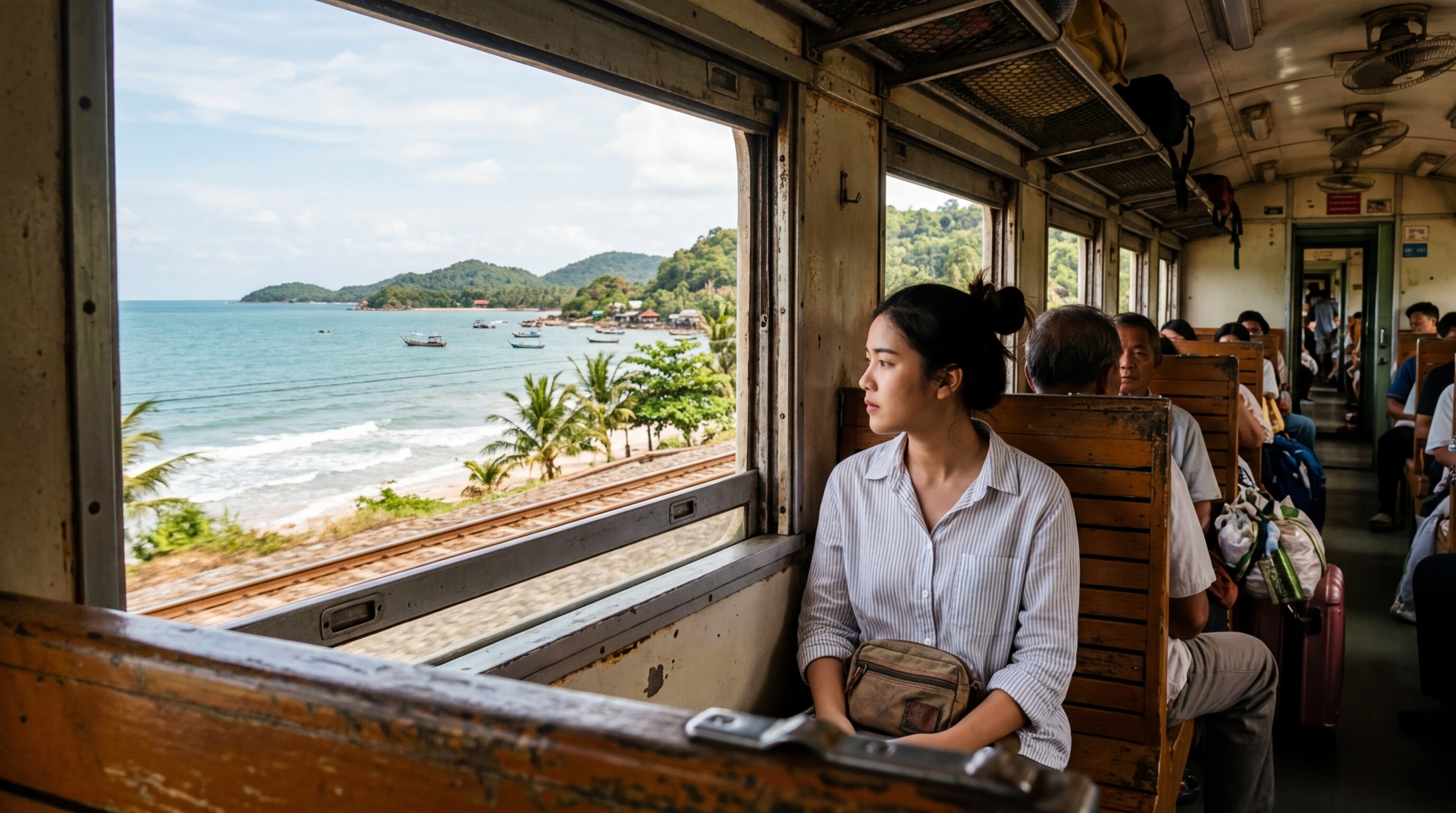
Salt Flats, Coconut Groves, and Gulf of Thailand Coastal Scenery
The Southern Line is Thailand's longest rail artery, eventually connecting all the way down to the Malaysian border. It hosts some of the best coastal scenic train routes Thailand can provide, yet most travelers use it simply as a dark, overnight bed to reach the ferry piers for Koh Samui or Koh Tao. That is a shame. The daytime run down the upper Gulf coast is wonderfully scenic in a completely different way than the northern mountains.
Best Daytime Trains for Coastal Views: Special Express No. 43
Take the Special Express Train No. 43, departing Bangkok at 07:30. By mid-morning, you are rolling through Phetchaburi and Hua Hin. The daytime Special Express No. 43 provides the best coastal glimpses of the Gulf of Thailand, cutting through salt flats and coconut plantations on its way to Chumphon. You will spot massive white salt pyramids glittering in the sun and isolated limestone crags, proving that scenic train routes Thailand aren't just about mountains. It is a peaceful, tropical landscape. The train arrives in Chumphon at 13:05, a 5.5-hour journey costing approximately 500 THB ($14) in 2nd class AC. The stretch between Hua Hin and Prachuap Khiri Khan (roughly 10:00–11:30) is the visual peak—watch for the narrow coastal strip where the tracks run between limestone cliffs and the open sea, with barely 50 meters separating the two. Near Prachuap, keep an eye out for monkeys on the tracks and the stunning bay view.
Route Planning for Koh Tao and Koh Samui Island Connections
This is the ideal train if you are heading to the islands but want to see the country first. You can ride Train 43 down to Chumphon, spend the night, and catch a morning ferry to Koh Tao. For route planning, check the Bangkok to Chumphon Train: Best Route to Koh Tao [2026] guide. If you want to go further south to Surat Thani in daylight, the newer Train 39/41 does the job perfectly. From Surat Thani, a combined bus+ferry ticket to Koh Samui runs 450–600 THB ($13–$17) and takes about 4 hours total. Insider tip: the Surat Thani train station is not actually in Surat Thani city—it is in Phun Phin, 14 km west. Free shuttle buses run to the city center and ferry piers, but you need to know they exist or you will be stranded looking for a taxi. The shuttles are well-signed upon exiting the platform and depart shortly after each train arrives.
Southern Line Train Comparison for Coastal Scenic Journeys
| Train No. | Route | Departs | Arrives | Duration | Price (2nd AC) | Visual Highlights | Book Online |
|---|---|---|---|---|---|---|---|
| Train 43 | Bangkok → Surat Thani | 07:30 | 16:10 | 8h 40m | 630 THB ($18) | Hua Hin station, salt flats, Prachuap Khiri Khan coast | Check Availability |
| Train 39 | Bangkok → Surat Thani | 22:50 | 06:20 | 7h 30m | 890 THB ($25) | None (Overnight journey) | View Sleeper Guide |
| Train 261 | Bangkok → Hua Hin | 09:20 | 13:10 | 3h 50m | 100 THB ($2.80) | Local village life, slow coastal approach (3rd class) | Buy Tickets |
| Train 37 | Bangkok → Sungai Kolok | 14:45 | 10:10 | 19h 25m | 1,150 THB ($32) | Nakhon Si Thammarat mountains (daylight portion) | Check Prices |
Wongwian Yai to Maha Chai: The Iconic Maeklong Railway Market Route
A Short but Culturally Rich Bangkok Commuter Train Experience
If you want a truly unique visual experience, the commuter train from Bangkok's Wongwian Yai station to Maha Chai (and onward to the Maeklong Railway Market) is unforgettable. This route provides an incredibly close-up view of local Thai life, culminating in the famous market where vendors pull back their awnings inches from the passing train. This short hop is one of the most culturally scenic train routes Thailand maintains. Tickets cost just 10 THB ($0.30). Trains depart roughly every 30–40 minutes from 05:30 to 20:00 daily. You cannot reserve these online, but you can easily buy them at the station on the day of travel. It is a slow, rattling journey through the urban sprawl and coastal salt flats of Samut Sakhon, offering a gritty, vibrant perspective of Thailand that express trains simply bypass.
Completing the Full Maeklong Railway Market Journey: Transfers and Timing
The Wongwian Yai to Maha Chai leg takes about 50 minutes. Once you arrive at Maha Chai, you will need to cross the Tha Chin River by a local ferry (3 THB, runs every 10 minutes) and walk 10 minutes to the Ban Laem station on the other side. From there, a separate train runs to Maeklong, departing approximately every 90 minutes, costing another 10 THB. The total journey from Wongwian Yai to Maeklong takes roughly 2 hours with the transfer. Insider tip: time your Maeklong arrival to coincide with a train scheduled to pass through the market—arrivals happen at approximately 08:30, 11:10, 14:30, and 17:40, though schedules shift. The 10 minutes before the train arrives, when the vendors fold up their awnings and pull back their produce in a choreographed dance, is the real show. Book the full day's logistics via thailandtrain.org to make sure your connecting times work. On the return trip from Maeklong, the train passes through the market again, offering another photo opportunity from the opposite angle.
7 Expert Tips for Enjoying Scenic Train Rides in Thailand in 2026
1. Know Your Sun Angles for Optimal Window-Side Scenic Views
When riding scenic train routes Thailand-wide, direction matters. On the Northern Line, sit on the left side to avoid the harshest afternoon sun and get the best views of the valleys. On the Southern Line heading down the coast, sit on the left to face the Gulf of Thailand. On the Death Railway from Kanchanaburi, the left side gives you the cliff-edge river views on the Wang Po Viaduct section.
2. Choose Clean Windows for Better Scenic Train Photography
The older 2nd class air-conditioned sleeper cars often have scratched, foggy windows that ruin photographs. The daytime Special Express DRCs are kept much cleaner. If you want pristine photos, third class is ironically best because you can physically open the window. On the DRC trains, windows do not open at all, but the glass is generally clean and scratch-free. Bring a microfiber cloth anyway—condensation forms on the glass in the mountain sections during cooler months (November–February).
3. Master the 90-Day Advance Booking Rule for Thai Trains
For 2026, the SRT's 90-day advance booking window applies to long-distance trains. These scenic train routes Thailand locals and tourists love sell out of window seats fast. Secure them via thailandtrain.org exactly 90 days out. The system opens at approximately 06:00 ICT each day for the date 90 days ahead.
4. Pack Layers for Aggressive Air-Conditioning on Thai Trains
It sounds ridiculous in a tropical country, but the air-conditioning on Thai express trains is famously aggressive. It will be 95°F outside and 60°F inside your carriage. I have seen tourists shivering in shorts and tank tops. A lightweight fleece or long-sleeve layer is non-negotiable for the DRC services. Third-class fan carriages, by contrast, can hit 100°F with humidity—dress for extremes depending on your class.
5. Manage Your Luggage Wisely Onboard Thai Trains
There are no dedicated luggage racks at the end of the cars on most Thai trains. Your bags stay with you at your seat or overhead. Don't bring massive hard-shell suitcases. A 40–50 liter backpack fits perfectly in the overhead rack or under the seat in front of you. On the DRC carriages, the overhead shelf runs the full length of the carriage and holds bags up to about 45 cm tall. Anything bigger sits at your feet, which gets uncomfortable over 11 hours. Review the Thailand Train Luggage Rules: Size Limits & Storage (2026) before packing.
6. Navigate Krung Thep Aphiwat Terminal Efficiently
Krung Thep Aphiwat is huge and slightly confusing. Arrive at least 45 minutes early. The departures hall has digital screens showing platform assignments, but these only populate about 20 minutes before departure. Before that, you are waiting in the seating area. Read up on the Krung Thep Aphiwat Terminal Guide: Skip Queues to save time. Insider tip: there is a hidden convenience store on the basement level (accessed via the MRT tunnel) that stocks Thai Railway Bento meals, snacks, and cold drinks at regular prices—far cheaper than the stalls on the platform level.
7. Use GPS Tracking to Monitor Scenic Landmarks on Your Route
The SRT runs a live tracking website (TTS). It is incredibly useful for knowing exactly when to have your camera ready for major landmarks like the Khun Tan tunnel or the Wang Pho viaduct. Alternatively, the app "Thai Railway Live" (available on Android and iOS) provides GPS-based real-time position tracking. On the Bangkok–Chiang Mai route, the app gives you roughly a 5-minute warning before each major scenic point, which is just enough time to switch your camera settings and compose the shot.
Quick Route Comparison: Which Scenic Train in Thailand Is Right for You?
| Route | Best For | Duration | Price Range | Best Time to Ride | Advance Booking? |
|---|---|---|---|---|---|
| Bangkok → Chiang Mai (Train 7) | Overall mountain scenery, photogenic journey | 11 hours | 641-891 THB | Daytime departure (09:05) | Essential (90 days) |
| Kanchanaburi → Nam Tok | History buffs, dramatic cliff views | 2-2.5 hours | 100 THB | Morning train (10:35) | No (buy at station) |
| Bangkok → Pasak Jolasid Dam | Unique seasonal experience, photo ops | ~6 hours (round trip) | 300-400 THB | Nov-Jan weekends | Critical (sell out fast) |
| Bangkok → Chumphon (Train 43) | Coastal views, island connections | 5.5 hours | ~500 THB | Daytime departure (07:30) | Recommended |
| Wongwian Yai → Maeklong | Cultural immersion, market experience | ~2 hours (with transfer) | ~23 THB total | Align with market train times | No (frequent departures) |
Each of these scenic train routes Thailand offers provides a distinct window into the country's soul. Whether you seek mountains, history, unique seasonal phenomena, or coastal charm, the Thai railway delivers an unforgettable adventure that's as much about the journey as the destination. Plan ahead, pack smart, and get ready to watch the Thai landscape unfold from the best seat in the house.