Thai Railway Stations: 2026 Guide to Krung Thep Aphiwat
Key Takeaway: Most long-distance journeys now depart from Bangkok's new Krung Thep Aphiwat Terminal, completely replacing the old Hua Lamphong station for express routes. Navigating Thai railway stations is straightforward once you know the basics. A 2nd-class sleeper ticket to Chiang Mai costs roughly 1,041 THB ($32) for the 13-hour trip, offering incredible value for overnight travel. Arrive 45 minutes before departure, grab some platform snacks, and book train tickets online a few weeks early to secure the highly coveted lower berths.
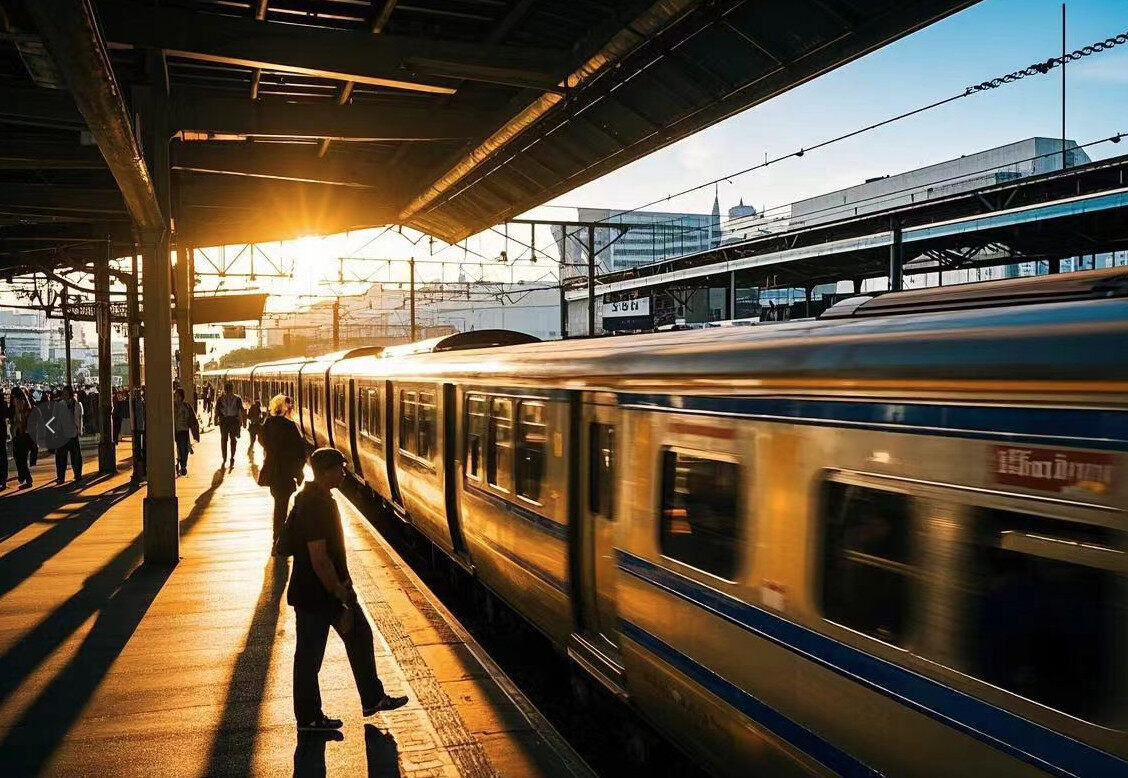
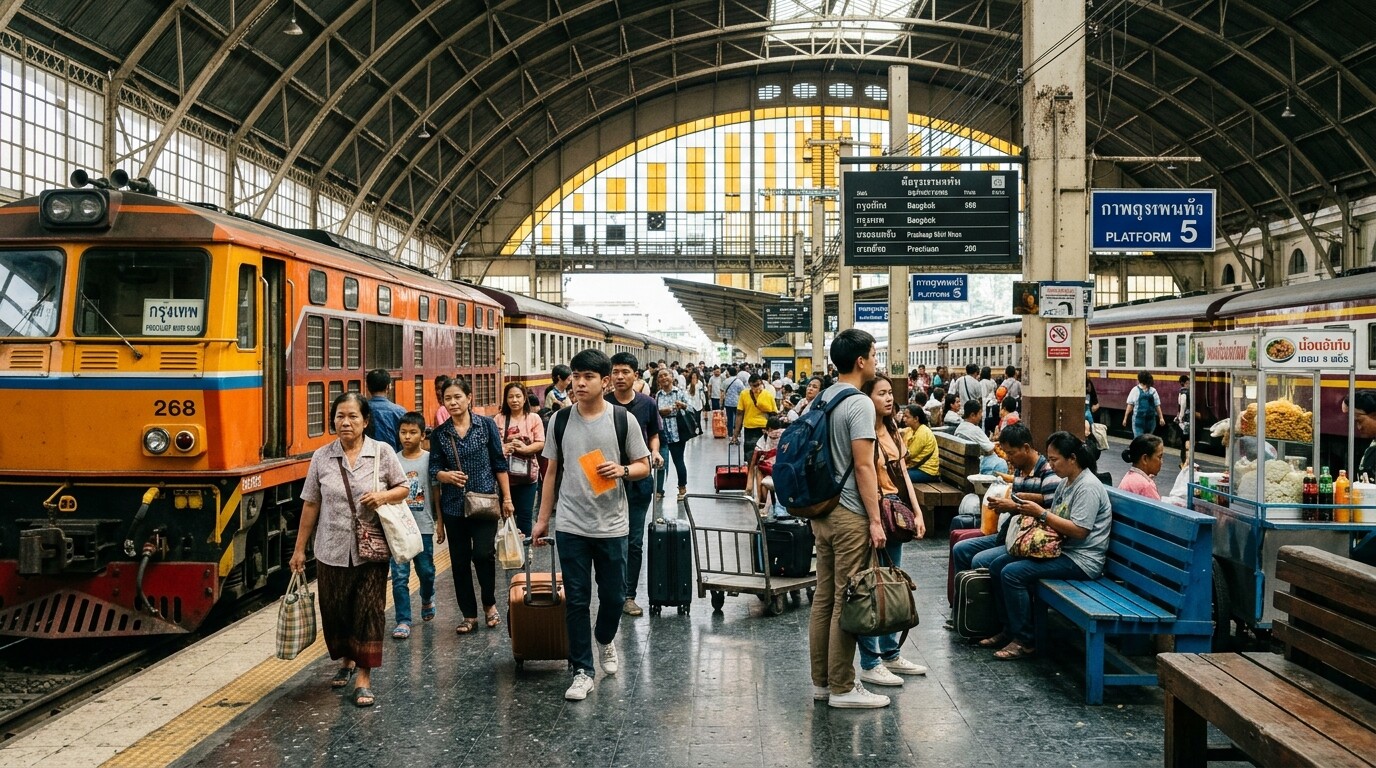
The smell of grilled pork skewers hits you first. Then comes the low, heavy rumble of a massive diesel locomotive pulling slowly into the concrete platform, signaling the start of your journey north. This is your introduction to Thai railway stations: A Practical Guide for Foreign Travelers. You might expect absolute chaos. But the reality is surprisingly organized. Trains generally run on time, the platforms are clearly marked in English, and the station food puts most airport lounges to shame. Forget the sterile environment of modern air travel. Riding the rails here connects you directly to the country's pulse.
Thai Railway Stations: Quick Overview & Ground Rules
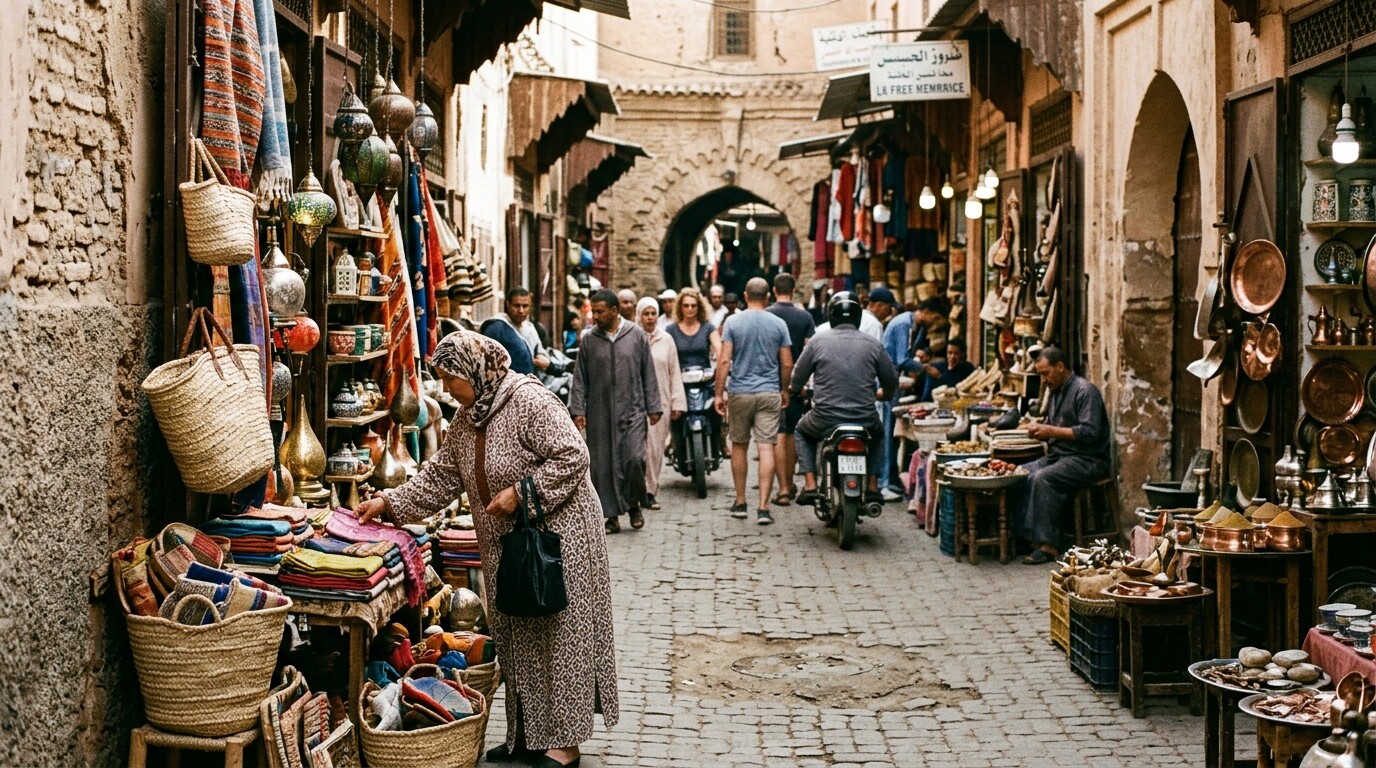
Before you pack your bags, let's get the ground rules straight. The system is run by the State Railway of Thailand, and operations have changed drastically in recent years.
- The Big Move: Bangkok's main hub is now Krung Thep Aphiwat Central Terminal (KTW), not Hua Lamphong.
- Ticket Checks: There are no turnstiles at most stations. Staff check your tickets manually on the train after departure.
- Alcohol Ban: You cannot buy or consume alcohol at Thai railway stations or on the trains. Station police enforce this strictly.
- Language Barrier: Major station signage is entirely bilingual (Thai/English), making navigation incredibly easy for foreigners.
- Cash is King: While major ticket counters accept credit cards, you need small Baht notes for food vendors, left-luggage counters, and station toilets.
Bangkok's Station Swap: Navigating the Capital
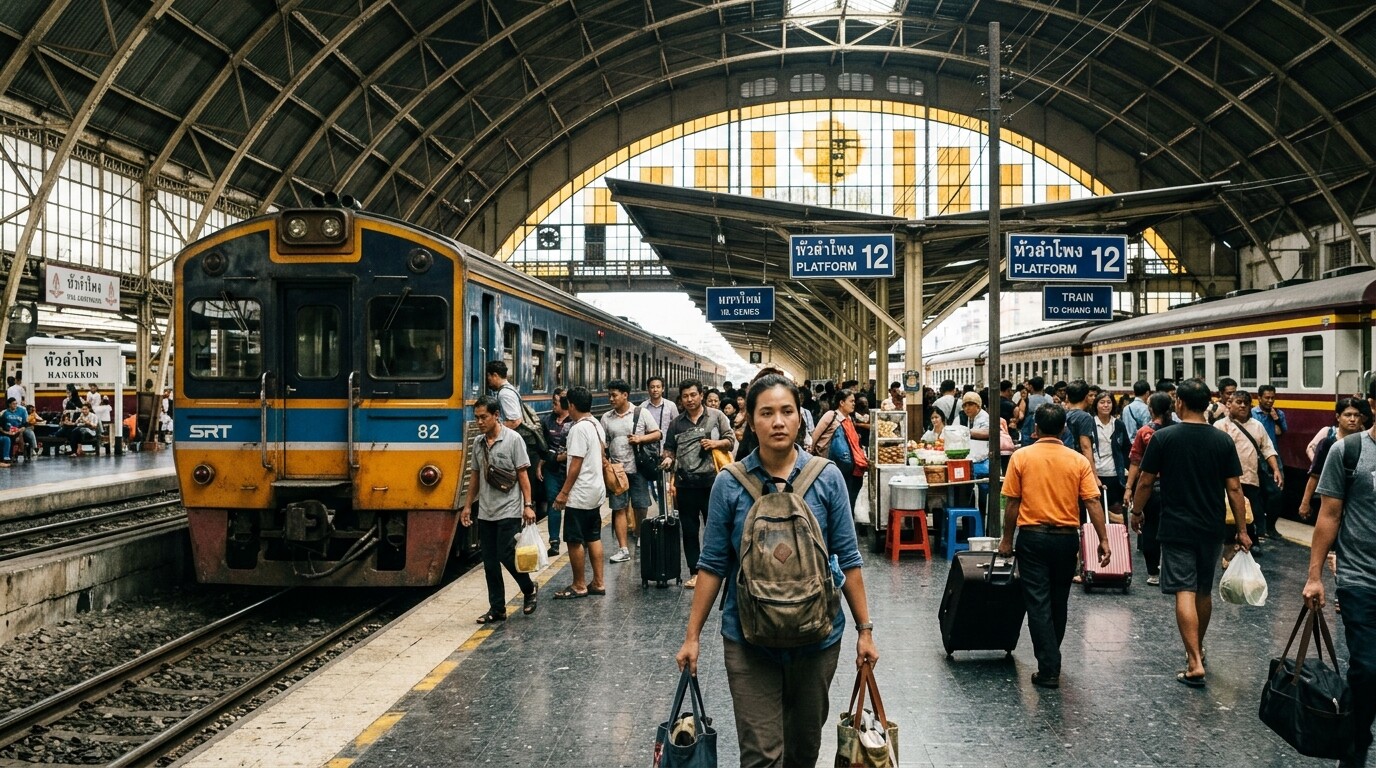
Bangkok has entirely rewired its railway operations. If you show up at the wrong station with ten minutes to spare, you will miss your train. It is that simple.
Krung Thep Aphiwat (The Modern Hub)
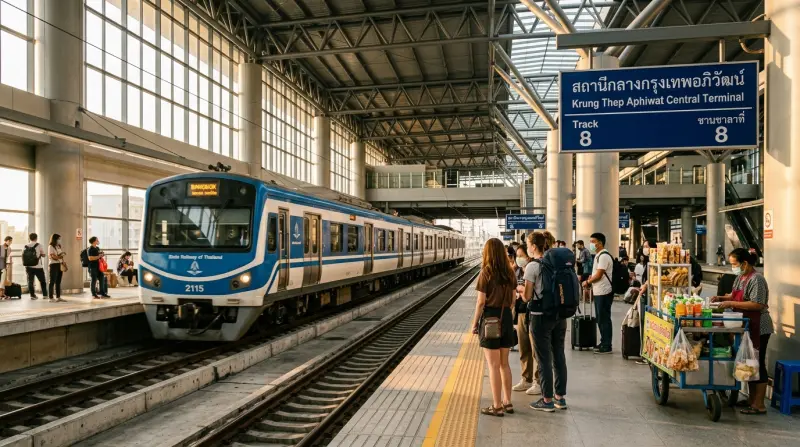
This massive, airport-like structure is the new undisputed king of Thai rail. All rapid, express, and special express trains to the north, south, and northeast depart from here. It feels slightly clinical compared to older stations. But the air-conditioning is fierce, and the sheer scale is impressive. You will find the ticket counters on the ground floor, while the trains depart from elevated platforms upstairs. While Hua Lamphong drips with 1916 neo-Renaissance charm, Krung Thep Aphiwat handles 90% of long-distance trains with airport-level efficiency.
Need help finding your way around this massive complex? Read our Krung Thep Aphiwat Central Terminal: 5 Pro Navigation Tips to avoid getting lost before your journey even begins.
Hua Lamphong (The Classic Survivor)
Many older guidebooks still list Hua Lamphong as the main hub. They are outdated. Today, this iconic, barrel-vaulted station mostly serves ordinary commuter trains, eastern line routes to Pattaya, and a handful of specialized tourist trains. It remains a gorgeous piece of architecture. Go take photos. Just don't expect to catch your sleeper to Chiang Mai from here in 2026.
| Station Name | Primary Use | Transit Connection | Vibe & Amenities | Action |
|---|---|---|---|---|
| Krung Thep Aphiwat (KTW) | All Long-Distance & Sleeper Trains | MRT Bang Sue (Blue Line) | Modern, AC, large food court | Book KTW Departures |
| Hua Lamphong | Commuter & Eastern Line (Pattaya) | MRT Hua Lamphong (Blue Line) | Historic, open-air, limited food | Check Local Routes |
| Don Mueang | Airport Connection (North/NE lines) | SRT Red Line / Airport | Convenient transit hub | Book Airport Trains |
If you are planning your trip, don't leave your seat to chance. Check latest prices on thailandtrain.org to guarantee a lower berth on your preferred date.
Regional Thai Railway Stations You'll Actually Use
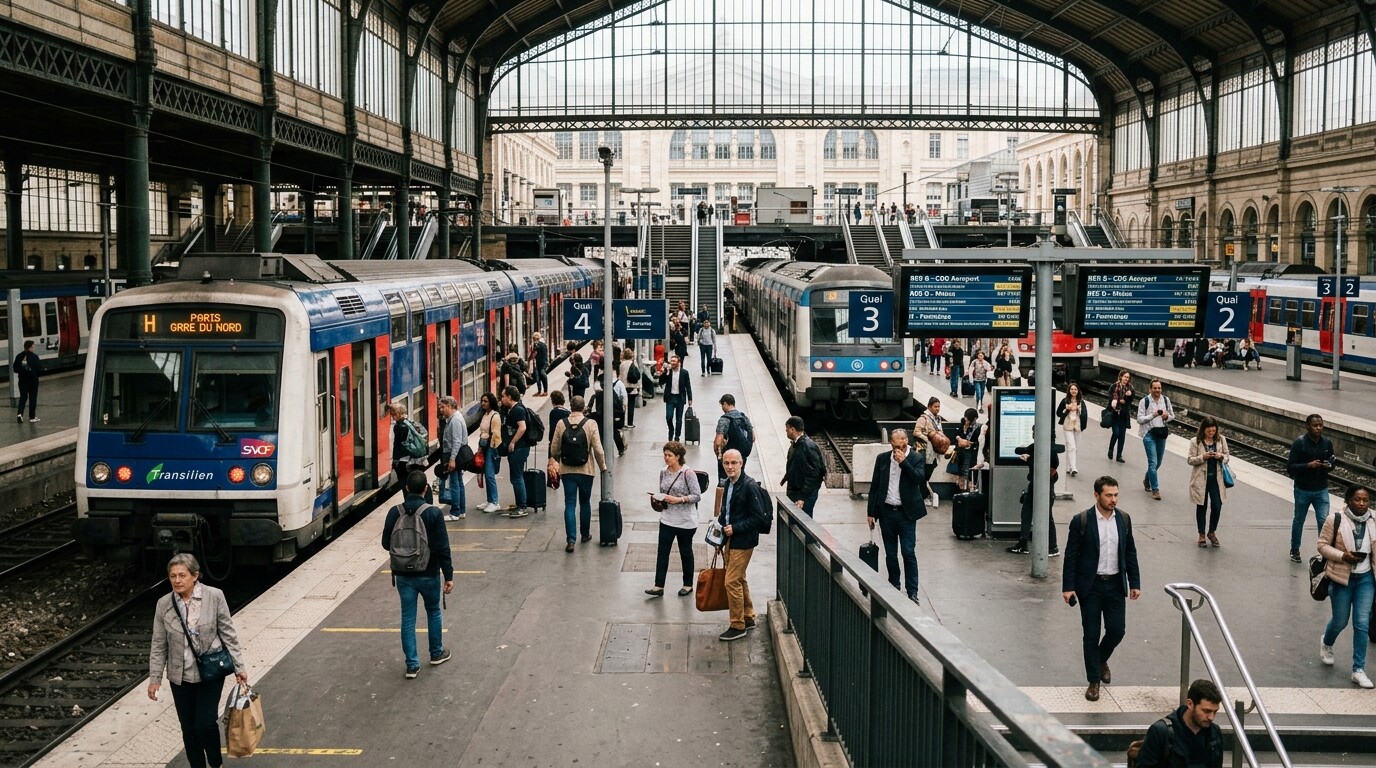
Once you leave Bangkok, regional Thai railway stations get smaller, older, and arguably much more charming. You will likely pass through at least one of these primary transit points.
Chiang Mai Station
Located just a few kilometers east of the old city moat, Chiang Mai's station is an active, open-air terminus. Red songthaews (shared taxis) wait aggressively in the parking lot to shuttle you to your hotel. The station itself has a decent coffee shop, a reliable left-luggage office, and clean bathrooms. If you are taking the popular Train #9 back to Bangkok, you will appreciate the shaded seating areas.
Planning this classic route? Check out our Bangkok to Chiang Mai Sleeper Train: Book Train #9 (2026) guide for specific seating strategies.
Surat Thani (The Island Gateway)
Here is the thing about Surat Thani: very few travelers actually stay in Surat Thani. Surat Thani station is essentially a massive transit funnel, moving thousands of passengers daily straight from overnight trains onto ferry buses bound for the Gulf islands. You step off the train at 6:00 AM. Immediately, tour operators holding clipboards direct you toward waiting buses for Koh Samui, Koh Phangan, and Koh Tao. It is highly active, but the system works flawlessly.
To understand exactly how much this journey costs and which train to pick, review our Bangkok to Surat Thani Sleeper Train [2026 Guide + Prices].
Nong Khai (The Border Crossing)
Sitting right on the edge of the Mekong River, Nong Khai is your jumping-off point for Laos. The station is quiet and functional. From here, you can catch the quick shuttle train across the Friendship Bridge to Thanaleng, or hop in a tuk-tuk to the border checkpoint. The international routes are expanding rapidly, making this a crucial hub for backpackers and visa-runners alike.
Interested in crossing the border? Read the Bangkok to Vientiane Direct Train: 2026 Sleeper Guide [New] for updated schedules.
| Station | Key Destinations | Left Luggage Cost | Avg. Time from BKK | Action |
|---|---|---|---|---|
| Chiang Mai | North (Pai, Chiang Rai) | 80 THB/day | 10 - 13 Hours | Book to Chiang Mai |
| Surat Thani | Koh Samui, Koh Phangan | 60 THB/day | 10 - 12 Hours | Book to Surat Thani |
| Nong Khai | Vientiane, Laos | 60 THB/day | 10 Hours | Book to Nong Khai |
| Chumphon | Koh Tao | 50 THB/day | 8 - 9 Hours | Book to Chumphon |
Ferry connections sell out just as fast as the trains during high season. Always book train tickets online using joint train-plus-ferry tickets to save yourself a massive headache at the station.
Station Amenities & Survival Guide
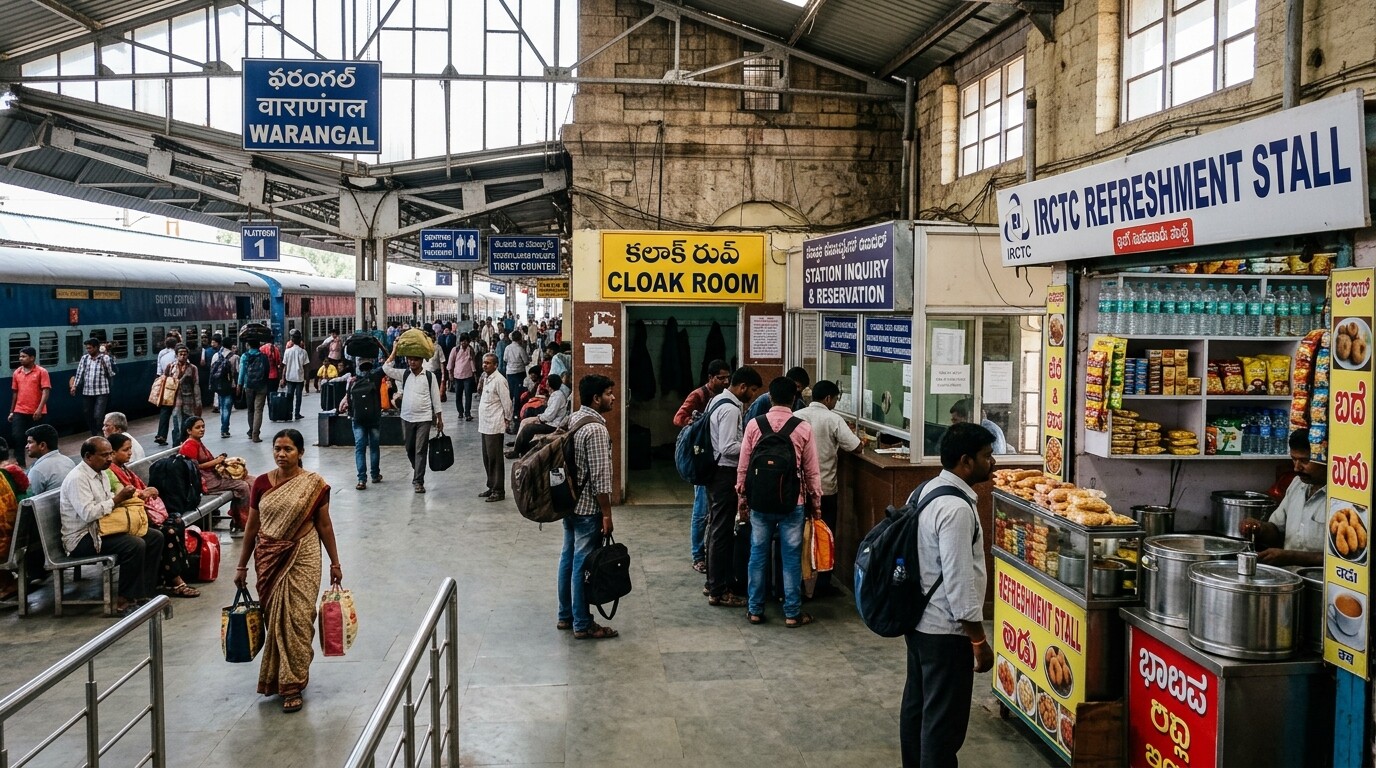
Thai railway stations are incredibly practical. They cater to people who actually travel, meaning you won't find luxury boutiques, but you will find exactly what you need to survive a 14-hour journey.
Food and Drink (Beyond Pad Thai)
Do not buy your main meals on the train if you care about flavor. Station food is cheaper, fresher, and vastly superior. At Krung Thep Aphiwat, the food court operates on a cash-card system and serves excellent duck noodles for about 60 THB. At provincial stations, vendors set up stalls directly on the platform. Grab a box of basil pork with rice (pad kra pao) and some sliced mango before boarding. Just remember the strict alcohol ban—station police absolutely enforce it.
Toilets and Showers
Station toilets are a mixed bag. Major hubs like KTW have pristine, western-style facilities with toilet paper provided. Older regional stations often feature squat toilets, and you must bring your own paper (or buy a 5 THB packet from the attendant). Some major stations, including Chiang Mai and Hua Lamphong, offer shower facilities for around 20 THB. Taking a quick shower before a long overnight journey is a massive relief in the tropical heat.
Luggage Storage (Left Luggage)
This is perhaps the greatest feature of the Thai rail network. You can store a massive 25kg backpack at most major Thai railway stations for just 80 THB a day, freeing you up to explore without breaking a sweat. Look for the "Left Luggage" or "Cloak Room" signs. They operate manually, giving you a paper tag in exchange for your bags. They are incredibly safe. I have left expensive camera gear in these rooms dozens of times without a single issue.
For detailed dimensions and what you can bring on board, check our Thailand Train Luggage Rules: Size Limits & Storage (2026).
Ready to lock in your itinerary? Book at thailandtrain.org to get your e-tickets delivered instantly.
7 Pro Tips for Mastering Thai Railway Stations
- Listen to the English Announcements: Unlike bus terminals, train stations broadcast clear, English announcements for every departure and arrival. Pay attention to track changes.
- The 7-Eleven Run: Every station has a 7-Eleven either inside or directly across the street. Stock up on water, wet wipes, and snacks here to save money.
- Ignore the "Helpful" Strangers: If someone approaches you outside the station claiming the train is full or offering to sell you a ticket, ignore them. Buy only from official counters or book Thailand train tickets online beforehand.
- Download the E-Ticket: In 2026, you do not need to print your ticket. A clear PDF on your phone is perfectly acceptable for the conductor to scan.
- Arrive 45 Minutes Early: Trains sometimes arrive at the platform 30 minutes before departure. Getting on early lets you stow your heavy bags securely.
- Understand Class Differences: The station waiting experience varies slightly. First-class passengers at KTW get a dedicated waiting lounge. Is the upgrade worth it? We break it down in 1st vs 2nd Class Sleeper Thailand: Is $17 Worth It?.
- Map Your Route: Thailand's rail network is vast. Before booking, visualize your trip by looking at a Thailand Train Map to ensure your station choices make geographical sense.
Frequently Asked Questions
Which is the main train station in Bangkok?
Krung Thep Aphiwat Central Terminal (KTW) is the main railway hub in Bangkok, having replaced Hua Lamphong for all long-distance express services. This modern terminal serves as the starting point for trains heading to the north, south, and northeast of Thailand.
How much is a 2nd-class sleeper train ticket to Chiang Mai?
A 2nd-class sleeper ticket from Bangkok to Chiang Mai typically costs around 1,041 THB ($32) for a 13-hour overnight journey. It is highly recommended to book train tickets online several weeks in advance to secure lower berths, which are wider and more comfortable.
Can you drink alcohol on Thai trains or at stations?
No, the consumption and sale of alcohol are strictly prohibited at all Thai railway stations and on all State Railway of Thailand trains. This ban is strictly enforced, and travelers should avoid bringing any alcoholic beverages onto the premises.
How early should I arrive at a Thai railway station?
You should arrive at least 45 minutes before your scheduled departure to locate your platform, navigate the large terminals, and purchase snacks. At Krung Thep Aphiwat, allow extra time as the platforms are elevated and quite far from the ground-floor ticket counters.
Do Thai railway stations have English signage?
Yes, all major Thai railway stations feature bilingual signage in both Thai and English to assist foreign travelers with navigation. Additionally, most staff at major hubs like Bangkok, Chiang Mai, and Surat Thani speak enough English to help with basic inquiries.